
You're probably deciding between two very different vacations without realizing it.
One version of snorkeling in Key West is rushed. You line up with a crowd, get a fast gear talk, splash in, and spend most of your time trying to stay oriented. The other version feels like Key West should feel. Warm water, an easy drift over structure, enough room to breathe, and a captain who chooses the right spot instead of forcing the day at the wrong one.
That difference matters here. Key West sits beside the Florida Reef Tract, and when you get the trip right, the reef doesn't feel like a tourist stop. It feels alive. The water shifts from bright turquoise to deep blue. A parrotfish flashes through the light. Sea fans sway with the surge. A turtle can appear without warning and disappear just as calmly.
If you're sorting through trip options, group size, shore access, and whether a sailboat charter is worth it, this guide will help you choose the kind of snorkeling day you'll remember. If you want a sense of the on-the-water atmosphere before booking, browse the Key West sailing gallery.
Table of Contents
An Introduction to Key West's Crystal-Clear Waters
Discovering the Florida Reef Tract Ecosystem
Where to Snorkel From Shore and by Boat
How to Choose the Perfect Key West Snorkeling Tour
Best Time to Snorkel and What to Pack
Snorkeling Safety and Reef Etiquette
Sample Itineraries for Your Key West Snorkel Trip
Frequently Asked Questions About Snorkeling in Key West
An Introduction to Key West's Crystal-Clear Waters
The first thing you notice when you slip into the water off Key West is how quickly the noise drops away. Boat engines fade. Shore chatter disappears. What's left is your own breathing through the snorkel, the sound of small wave energy moving over rock and coral, and that suspended feeling that makes even a short swim feel bigger than it is.
Good snorkeling here isn't about racing from one thing to the next. It's about slowing down enough to notice the details. Sergeant majors flicker near structure. A patch of coral starts to look less like stone and more like a neighborhood. The best swimmers cover ground. The best snorkelers usually settle in and let the reef reveal itself.
What makes Key West different
Key West has a real geographic edge. You're not driving hours after arriving in town and hoping the water's worth it. The reef is part of the draw from the start, and that shapes the whole experience. Some days are glassy and bright. Some days are breezy and better suited to protected spots. Either way, local knowledge matters more than glossy brochure language.
That's why snorkeling in Key West rewards the right expectations. If you come looking for aquarium conditions in every direction, you may miss what's special. This water changes with light, current, and wind. The people who have the best day are usually the ones who work with those conditions instead of fighting them.
Local perspective: The best snorkel isn't always the farthest run or the busiest reef name. It's the site that matches that morning's conditions and the group's comfort level.
The feel of a strong snorkel day
A strong day usually starts early, before the afternoon chop builds. The ride out feels unhurried. Gear fits properly. The captain gives simple instructions, not a speech full of filler. When you enter the water, you know where the current is moving and where the structure sits.
That's when snorkeling Key West starts to make sense. You stop wondering whether you picked the right activity. You just float, look down, and follow the reef line.
Discovering the Florida Reef Tract Ecosystem
What you're snorkeling over isn't random bottom. It's part of a system that gives Key West its underwater identity.
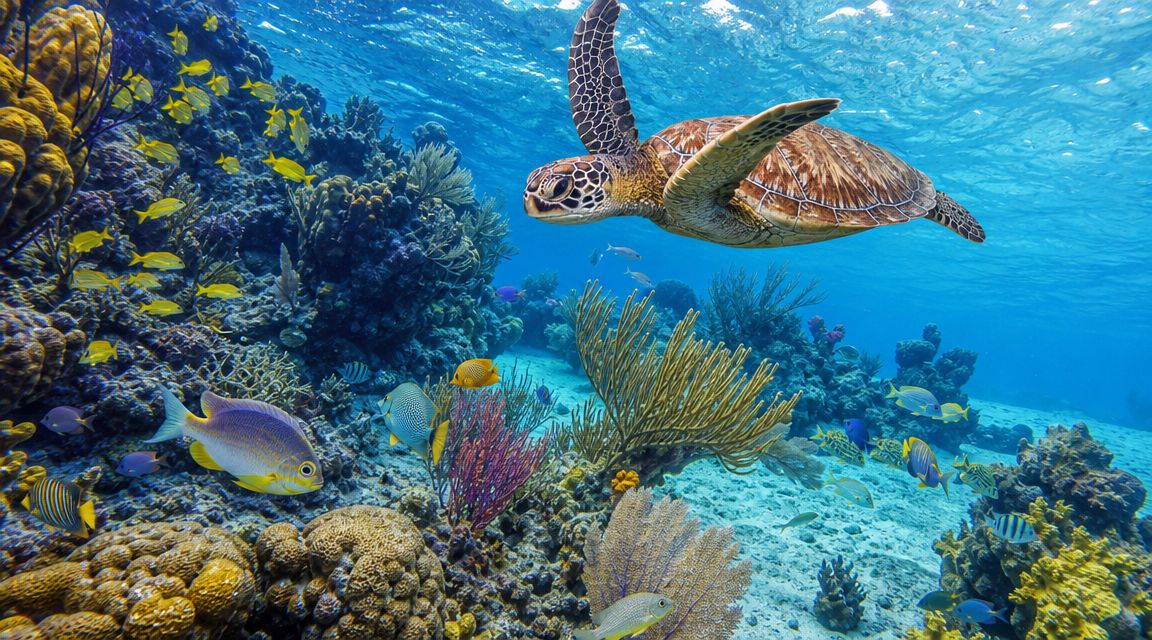
Snorkeling in Key West provides access to the Florida Reef Tract, described as the world's third-largest living coral reef system and the only one in North America. The same Key West reference notes that this habitat supports more than 1,400 marine species, including more than 500 tropical fish species, with common sightings of sea turtles and spotted eagle rays in shallow water often under 20 feet deep. That accessibility is one reason first-timers and experienced swimmers can both enjoy it on the same trip, as noted in this Key West reef overview.
What you're actually looking at underwater
A lot of visitors say they want to “see coral,” but it helps to know what that means in practice. Reef areas are made of structure, pockets, ledges, sand channels, and living communities that attract fish at different depths and angles. The visual payoff comes when you stop staring only into open water and begin scanning along edges and contours.
You'll often get more out of a snorkel by looking slightly ahead and down, not straight below your chest the whole time. Fish move through lanes. Turtles cruise past structure. Rays tend to appear when the group has quieted down and the water has settled.
The cast of characters
Some reef life is obvious right away. Bright tropical fish usually give the first reward. Larger animals take more patience.
A few things to watch for:
- Tropical fish schools: These provide the constant motion that makes a reef feel active.
- Sea turtles: Usually the most memorable sighting for casual snorkelers because they move calmly and hold the whole group's attention.
- Spotted eagle rays: A special encounter when conditions are right and visibility lines up.
- Life around coral heads and ledges: The closer you are to the structure, the more life you tend to notice.
The reef rewards calm movement. Splash hard, chase animals, or kick down into the water column, and you'll often watch the best encounters vanish ahead of you.
Why this changes the trip
Once you understand that the reef is a living system, snorkeling stops being a box to check. It becomes easier to read the water, easier to listen to a captain's site choice, and easier to appreciate why a protected shallow reef can outperform a more famous spot on the wrong day.
That's a substantial upgrade. You're not just swimming over blue water. You're visiting one of the defining marine habitats in this part of the hemisphere.
Where to Snorkel From Shore and by Boat
Visitors usually face one core choice. Walk in from shore, or get on a boat and reach the reef properly. Both can work, but they are not interchangeable experiences.
The main shore-access option is Fort Zachary Taylor State Park. It's useful, local, and convenient, but it's important to be realistic about it. The snorkeling there is centered on breaker-rock piles, not a true coral reef, and the area has a documented current that can shift from east to west. The same Key West snorkeling guide also notes that visibility is often around 20 feet or less, which makes your position relative to structure much more important than swimming farther out. For offshore names like Sand Key, Rock Key, and Western Sambos, a boat is required, as described in this Key West site guide.
Shore snorkeling at Fort Zach
Fort Zach is best for people who want a casual session without committing to a boat trip. It's also useful if you're testing gear, snorkeling with low expectations, or adding a quick water activity to a beach day.
What works there:
- Start on the eastern side: Enter near the eastern rock pile and work west with the current when conditions favor that line.
- Stay inside the buoy line: Boats pass outside it, so don't drift wide just because the water looks open.
- Snorkel the structure, not the horizon: Fish hold around the rocks. Swimming straight offshore usually burns energy without improving the view.
What doesn't work:
- Expecting reef-style coral scenery: That's not what this site is.
- Ignoring the current: Fort Zach can feel easy from shore and still wear people out.
- Going too far from the rocks: In average visibility, distance from structure usually means less to see.
Boat snorkeling on offshore reef sites
Boat trips change the equation because they get you to places shore swimmers can't reach. That matters in Key West. If your goal is the best version of snorkeling Key West offers, offshore access is usually the deciding factor.
A good captain picks the reef based on conditions, not ego. On some mornings that means a well-protected site. On others it means a different line with better surface comfort and cleaner viewing angles.
You can get a feel for the kind of boats people compare when weighing trip styles by looking at different Key West charter vessels.
Key West Snorkeling Sites at a Glance
| Location | Access Type | Best For | What You'll See | Skill Level |
|---|---|---|---|---|
| Fort Zachary Taylor State Park | Shore | Budget-minded visitors, flexible beach days | Rock piles, fish around structure, nearshore snorkeling | Beginner to intermediate, depending on current |
| Sand Key | Boat | Visitors who want classic reef access | Offshore reef structure and marine life around the reef | Beginner to intermediate |
| Rock Key | Boat | Guests focused on a fuller reef experience | Reef structure, fish activity, stronger sense of being on the reef | Beginner to intermediate |
| Western Sambos | Boat | People prioritizing offshore access and conditions-based site choice | Reef habitat and open-water snorkeling around offshore structure | Intermediate, depending on conditions |
How to Choose the Perfect Key West Snorkeling Tour
Snorkel trip shoppers often compare departure times, drink packages, and price first. That's understandable, but it's not the best filter. The key question is simpler. What kind of day do you want once you're off the dock?

A large commercial trip can be fine if your priority is volume and predictable scheduling. You show up, follow the flow, and get a standardized version of the outing. For some groups, that's enough. For others, especially couples, families, and travelers who care about the feel of the boat day, the crowd becomes the whole story.
The trade-off most visitors feel too late
Mass-market tours usually move people efficiently. What they often don't provide is space. Space on deck, space in the water, space to ask questions, and space for the captain to shape the day around the conditions and the group.
Smaller sailing charters tend to do better at the parts that matter once the trip begins:
- Pacing: You're not being herded in and out of the water.
- Briefing quality: Crew can check mask fit and comfort level.
- Site selection: Smaller, more attentive operations often make smarter decisions about where the snorkel will work best.
- Atmosphere: A classic schooner or well-run sailboat gives the day a completely different tone than a packed party platform.
That's especially true in Key West, where marine conditions can make one reef feel inviting and another feel sloppy.
What the better trips have in common
One operator description of Key West reef trips notes snorkeling depths of roughly 3 to 30 feet, while another points out that common reef destinations include Sand Key, Rock Key, Eastern Dry Rocks, and Western Sambo, with the captain making the final site call based on conditions. The same source says a 3 to 4 hour trip with about an hour of reef time is a common benchmark. In practice, that means calm departures, limited site-hopping, and efficient gear handling matter a lot more than overpromising on itinerary names, as outlined in this Key West snorkel trip reference.
Booking rule: Pick the operator that talks clearly about conditions, site choice, and in-water experience. Be cautious with tours that sell the vibe on land but stay vague about the actual snorkel plan.
Questions worth asking before you book
Don't ask only, “How long is the trip?” Ask better questions.
- How does the captain choose the snorkel site? If the answer is conditions-based, that's a good sign.
- What does the water entry feel like for beginners? You want a simple explanation, not a dismissive one.
- How much of the trip is actual snorkel time? Travel time and floating time aren't the same.
- What kind of boat is it? That affects comfort, crowding, and the entire tone of the outing.
For travelers who prefer a more intimate day on the water, it's worth reviewing shared charter options in Key West before choosing.
Value is more than ticket price
Snorkeling in the Keys has been measured as a high-value recreation experience for years. A U.S. Forest Service paper on the Florida Keys estimated an annual average user value of about $481.15 per person-trip, with a standard error of $68.06. The same paper cites earlier estimates of $653.94 per person-trip, including $740.52 in summer and $561.19 in winter, and another estimate of $1,087 for Florida Keys diving, snorkeling, or glass-bottom-boat participation. It also reported a negative and statistically significant travel-cost coefficient, which supports the idea that demand responds measurably to price. You can review those figures in the U.S. Forest Service recreation valuation paper.
That doesn't mean the most expensive trip is best. It means the experience has real value, and choosing the wrong format to save a little upfront can cost you the day you came here to have.
Best Time to Snorkel and What to Pack
The best time to snorkel in Key West is usually the time when your group can get on the water early, stay flexible, and let the conditions drive the plan. That's more useful than chasing a perfect season on paper.

Morning trips usually have the edge. Light is cleaner, the water often feels calmer, and people still have energy for the swim. Afternoon trips can still be fun, but they're less forgiving if your group is new to snorkeling or gets tired in the sun.
Picking the right day for your group
The strongest approach is to match the day to your people, not to a fantasy version of the reef.
If you're traveling with confident swimmers, you can tolerate a little more motion and still enjoy the snorkel. If you've got kids, nervous first-timers, or someone who hasn't used a mask in years, choose the calmest departure you can and avoid making the day too ambitious.
A practical rhythm looks like this:
- Couples: Early departure, unhurried lunch, low-key afternoon.
- Families: Morning trip while attention spans are still high.
- Cruise visitors: Build in extra cushion so a tight schedule doesn't rush the water time.
- Photographers: Prioritize clear light and simple entry over squeezing in multiple stops.
What to pack and what people forget
Good gear habits make a bigger difference than expected. You don't need to overpack. You do need a few things dialed in.
Bring these:
- Rash guard or sun shirt: Better than relying only on sunscreen once you're in and out of the water.
- Reef-safe sunscreen: Apply it early so you're not greasing up masks and decks at the last minute.
- Dry bag: Keep phone, towel, and spare layers together.
- Water bottle: Dehydration sneaks up fast in sun and salt.
- Your own mask, if you have one: Familiar gear reduces stress.
- Easy sandals: Wet decks and complicated footwear don't mix.
- Waterproof phone pouch or camera: Only if you'll use it without turning the trip into a filming project.
What not to bring
Some items create more hassle than benefit:
- Heavy beach bags: They get dumped in a corner and become clutter.
- Jewelry: Saltwater and small boat routines aren't kind to it.
- Too many layers: One dry change is usually enough.
- Unrealistic expectations for makeup or hair: Snorkel days are water days. Dress accordingly.
Pack for comfort after the swim, not for looking polished during it. The people who enjoy the day most are usually the least overcomplicated.
Snorkeling Safety and Reef Etiquette
A good snorkel day starts with simple decisions. Stay within your ability, listen to the briefing, and don't treat the reef like a theme park prop.
The basics still matter because they prevent most avoidable problems. Snorkel with a buddy. Hydrate before you feel thirsty. If you're tired, cold, or anxious, say so early instead of pushing through it in silence. Pride burns more energy than current does.
Safety that actually helps
People often focus on dramatic risks and ignore the common ones. In Key West, the bigger issue is usually fatigue, sun, poor mask fit, or getting separated from the part of the site where the captain told you to stay.
Keep these habits:
- Use the flotation offered: Especially if you're a casual swimmer or haven't snorkeled recently.
- Clear your mask before you need to: Practice once near the boat or shoreline.
- Watch the current line: It's easier to drift than to fight your way back.
- Respect turn-back signals from your own body: Shorter, calmer snorkels beat long, sloppy ones.
Reef etiquette that protects the place
Coral and marine life don't need your touch to be memorable. In fact, the best snorkelers are usually the least disruptive in the water. They keep their fins high, move slowly, and don't chase wildlife for a photo.
That means:
- Look, don't touch: Coral is living habitat, not underwater decoration.
- Don't stand on structure: Even if the water looks shallow enough.
- Control your fins: Kicking up sand reduces visibility for everyone.
- Give animals space: If a turtle changes direction because of you, you were too close.
For broader on-the-water awareness, these practical sailing safety tips in Key West are useful reading before any charter day.
The reef gives you more when you move like a guest, not an owner.
Sample Itineraries for Your Key West Snorkel Trip
A good plan depends on who's in your group and how much time you have. These three sample outlines work because they match the trip style to the traveler.

For couples who want the day to feel special
Book a morning snorkel sail instead of trying to jam everything into the hottest part of the day. Eat a late lunch afterward, shower, and leave your evening free for a separate sail. Keeping the snorkel and the sunset as two different experiences makes the whole day feel less rushed.
This is where intimate boats shine. If you're choosing between a loud group outing and a classic sailing experience, couples almost always remember the one that gave them room to breathe and time to enjoy the water.
For families who need flexibility
Families usually do better on a trip where the pace can bend a little. Kids may love the boat ride and only want a modest amount of time in the water. Another family member may be confident and want more.
The best family approach often looks like this:
- Prioritize easy entry: A calm, well-managed first splash sets the tone.
- Keep expectations loose: One good snorkel is enough.
- Choose comfort over ambition: Shade, seating, and crew attention matter.
- Bring snacks and dry clothes for after: Post-snorkel moods improve fast when everyone can reset.
If your family includes mixed ages or nervous swimmers, a smaller charter format often beats a large shared boat because nobody feels like they're slowing the group down.
For cruise visitors with limited time
Cruise guests need efficiency more than variety. Don't try to stack too many activities. Pick one strong snorkel outing with a realistic buffer for getting on and off the ship.
The smartest port-day plan is usually:
- Book a morning departure if your ship timing allows.
- Confirm exactly where the boat leaves from.
- Choose a trip with clear logistics and a straightforward reef plan.
- Leave enough margin to return without stress.
For cruise travelers, snorkeling Key West works best when it feels controlled. The minute you start gambling on a packed itinerary, the water stops being relaxing.
Frequently Asked Questions About Snorkeling in Key West
Can non-swimmers snorkel in Key West
Yes, many non-swimmers can still enjoy a snorkel trip if they're comfortable in a life vest or flotation and listen closely to the crew. The key is choosing a calm day and not pretending confidence you don't have.
Is shore snorkeling enough for most visitors
It depends on your expectations. If you just want a quick nearshore swim with some fish around structure, shore access can be enough. If you want the fuller reef experience typically associated with Key West, boat access is the better choice.
What if I wear glasses
Ask about prescription mask options, or bring contact lenses if that's comfortable for you. A poorly fitting rental mask creates more problems than bad eyesight does.
Are sharks a concern
Most snorkelers don't spend their trip dealing with sharks, and panic about them is usually far out of proportion to the actual experience. Stay calm, follow crew instructions, and focus on the conditions you can control.
Should I bring my own snorkel gear
If you already own a mask that fits your face well, bringing it can make the day easier. If you don't, quality rental gear is usually fine. Fit matters more than brand.
How do I know if a tour is right for my group
Look at group size, boat style, how the operator describes site selection, and whether the trip sounds rushed. Those details tell you more than flashy marketing copy.
For practical planning details before you book, the Key West charter FAQ page answers common trip questions clearly.
If you want a more personal day on the water, Sunset Sail Key West is worth a close look for classic sailing charters, intimate shared trips, and private outings built around the genuine feel of Key West instead of the crowd-heavy version of it.